
Simulating How Large Language Models Will Shift Travel Patterns

Seonjin Lee
Lori Pennington-Gray

2026-01-09

Large Language Models in Tourism

  • Large Language Models (LLMs)
    • Trained on large text data
    • Recognize patterns and generate human-like text1
    • e.g., Gemini (Google), Claude (Anthropic), Grok (X),…
  • Two in three tourists have already used them2
  • Directly integrated to major tourism platforms
    • (e.g. Booking.com, Expedia, TripAdvisor)24
  • Indirectly through search engines & social media

Why Should it Matter?

LLMs are affecting human decisions, leading to real-world impacts5

  • But what kinds of impacts?
  • Some argue positive impacts of LLMs on tourism & hospitality sectors
    • e.g. Reduced cognitive load, increase performance, competitive advantage68
  • Others caution against their negative consequences
    • e.g. Reduced uniqueness, worsened over-tourism, ethical concerns911

Rapid adoption, unknown consequences

  • Lack of empirical evidence on impact of LLMs on T&H
    • Studies mostly focus on LLM adoption behaviors (why, who, when)12,13
    • Few studies focus on their consequences; mostly anecdotal or conceptual11,14
  • Proprietary and opaque

Rapid adoption, unknown consequences

  • Lack of empirical evidence on impact of LLMs on T&H
  • Proprietary and opaque
    • LLM outputs are determined by several factors (data, architecture, feedback)15
    • These components are often proprietary & closed-source5
    • Even with access, LLM is inherently a “black box”

Research Question

What consequences await destinations

if more tourists rely on LLMs to guide their travel decisions?

Study Design

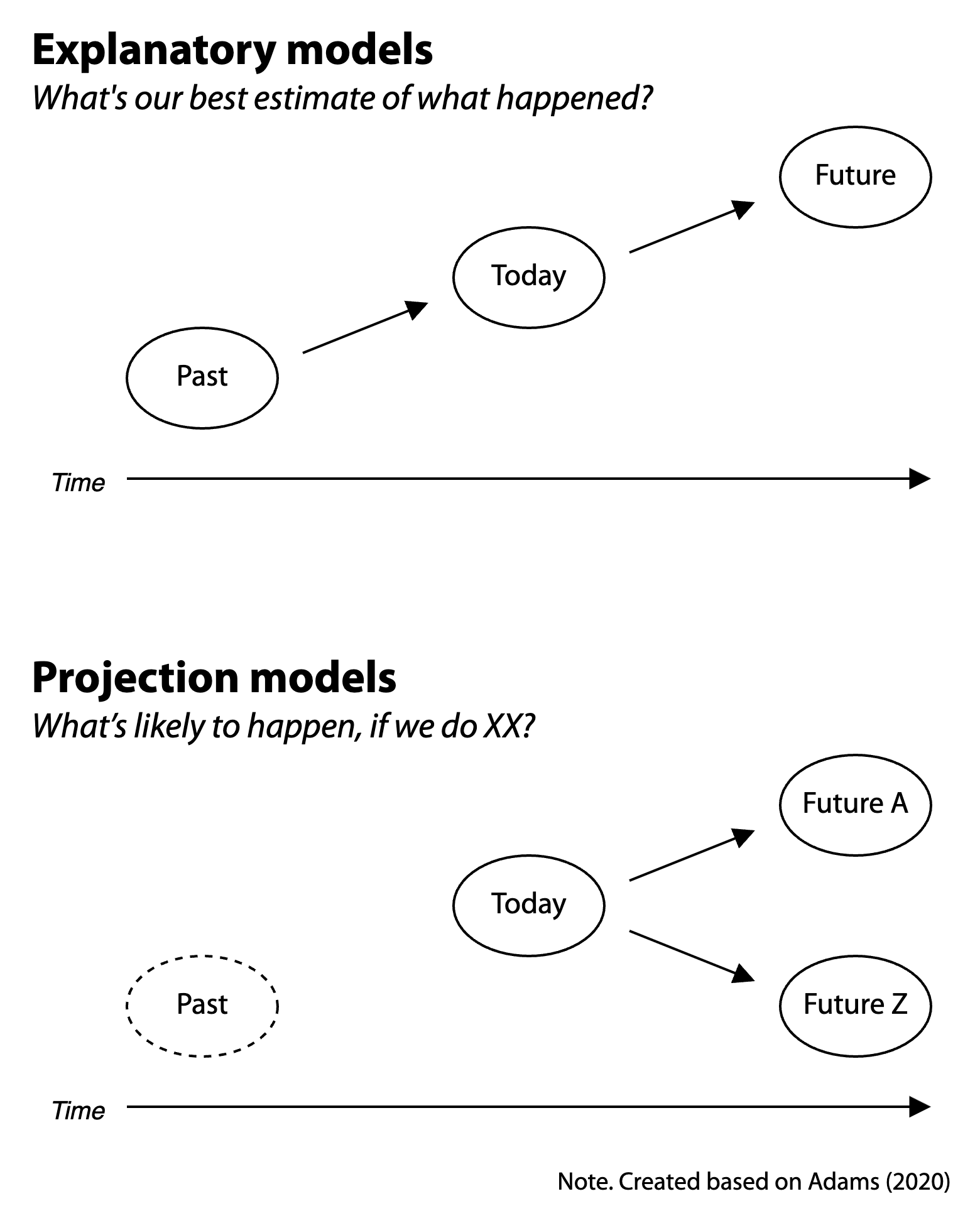
  • Relying on explanatory models is not feasible
    • Difficult to isolate LLM’s impact from other factors
    • Designed for things that have already happened16
  • Instead uses scenario-based projection approach
    • Project future outcomes based on explicit assumptions
    • e.g., Shared Socioeconomic Pathways (SSPs)
  • Simulate scenarios when LLMs make ALL tourist decisions
  • Compare LLM simulations with real-world tourism patterns
Study Design

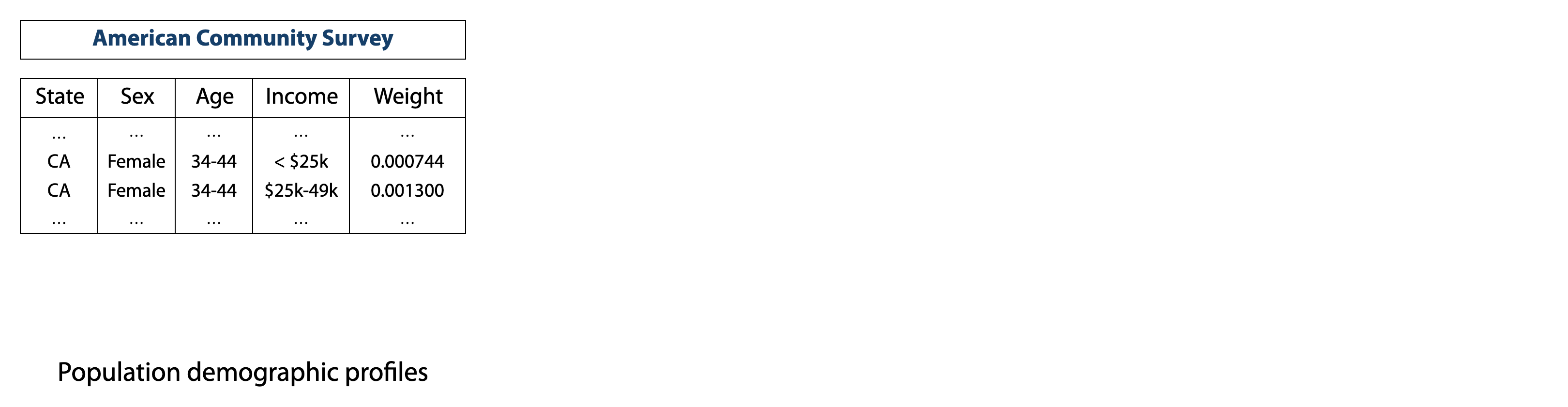
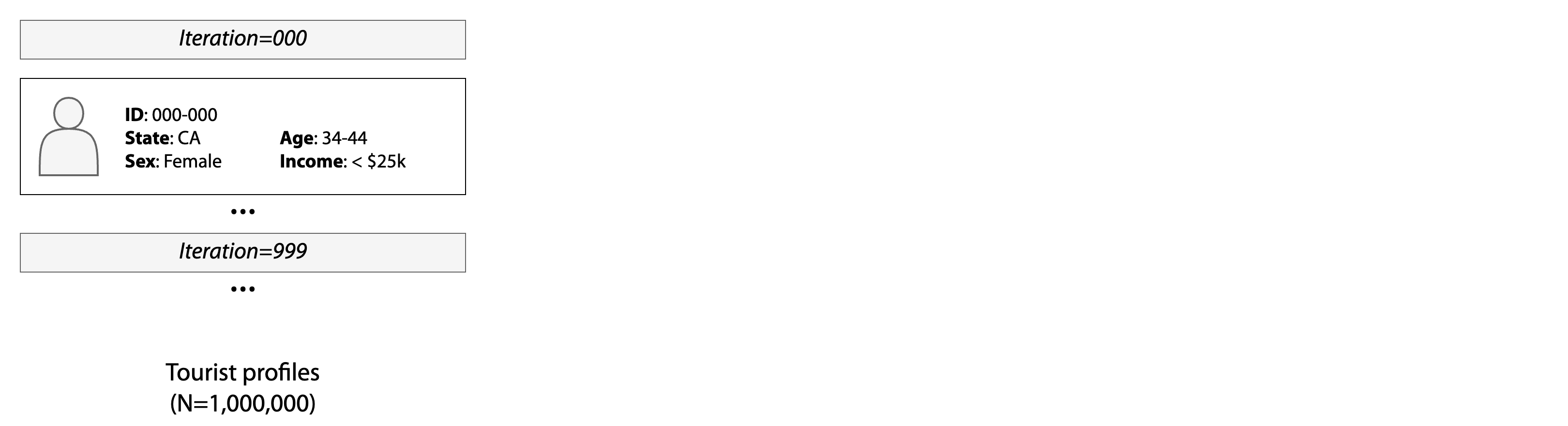
Create empirical-based tourist profiles

US domestic tourist (50 states + DC), stratified by origin state, sex, age, & income
Study Design

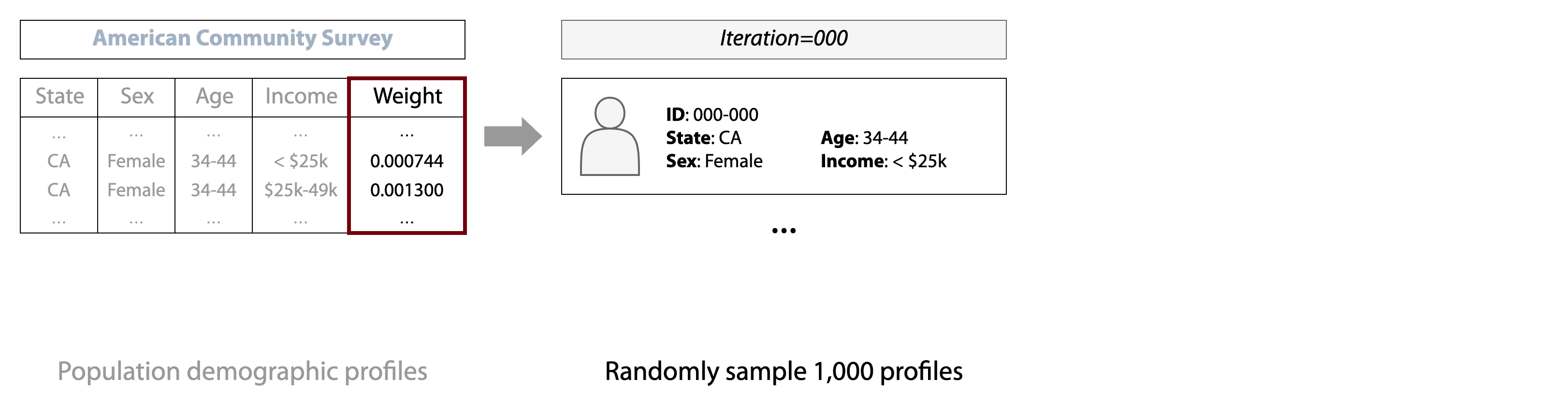
Create empirical-based tourist profiles

US domestic tourist (50 states + DC), stratified by origin state, sex, age, & income
Study Design

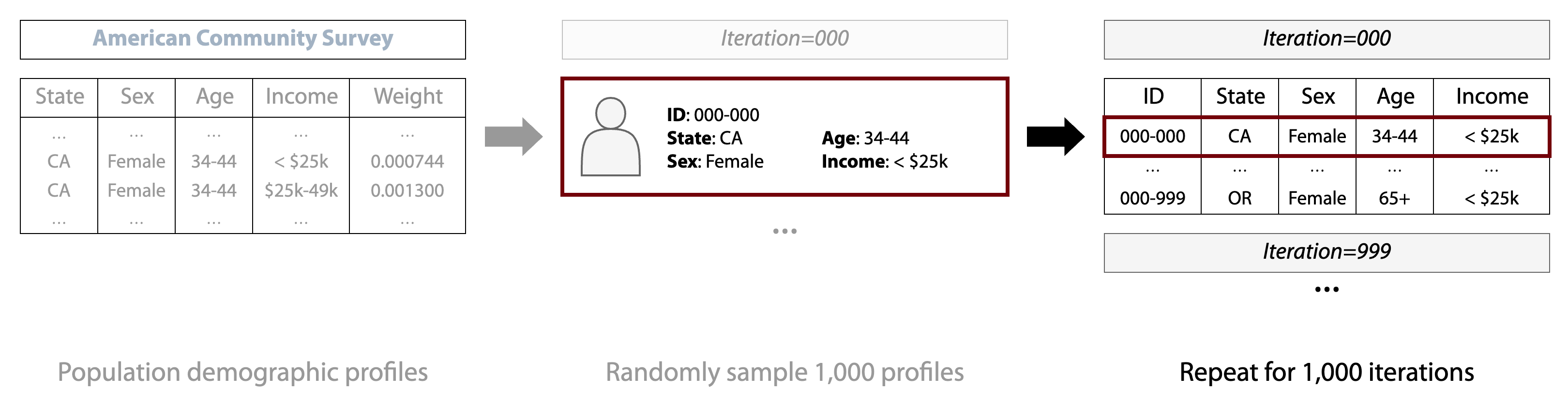
Create empirical-based tourist profiles

US domestic tourist (50 states + DC), stratified by origin state, sex, age, & income
Study Design

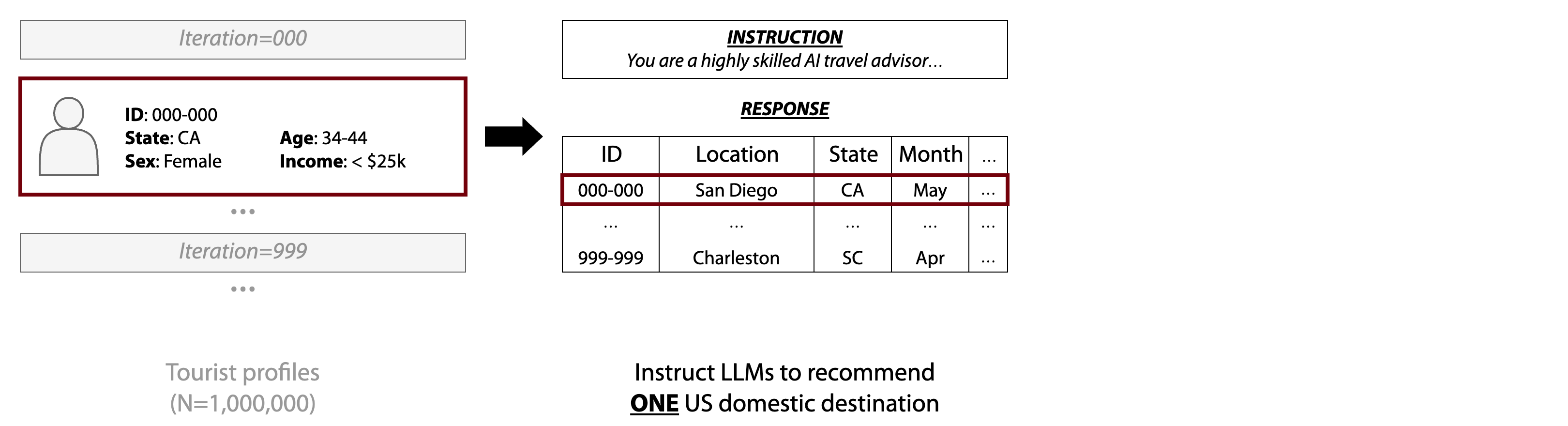
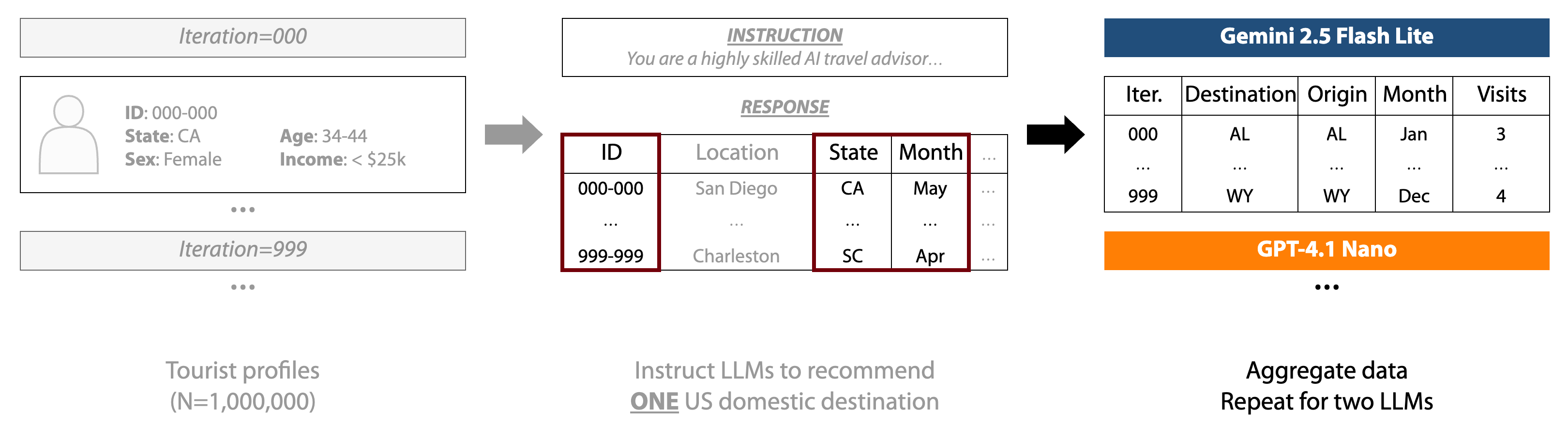
LLM Simulation

Simulate tourist visits using empirical-based tourist profiles and LLMs
Study Design

LLM Simulation

Simulate tourist visits using empirical-based tourist profiles and LLMs
Study Design

LLM Simulation

Simulate tourist visits using empirical-based tourist profiles and LLMs
Study Design

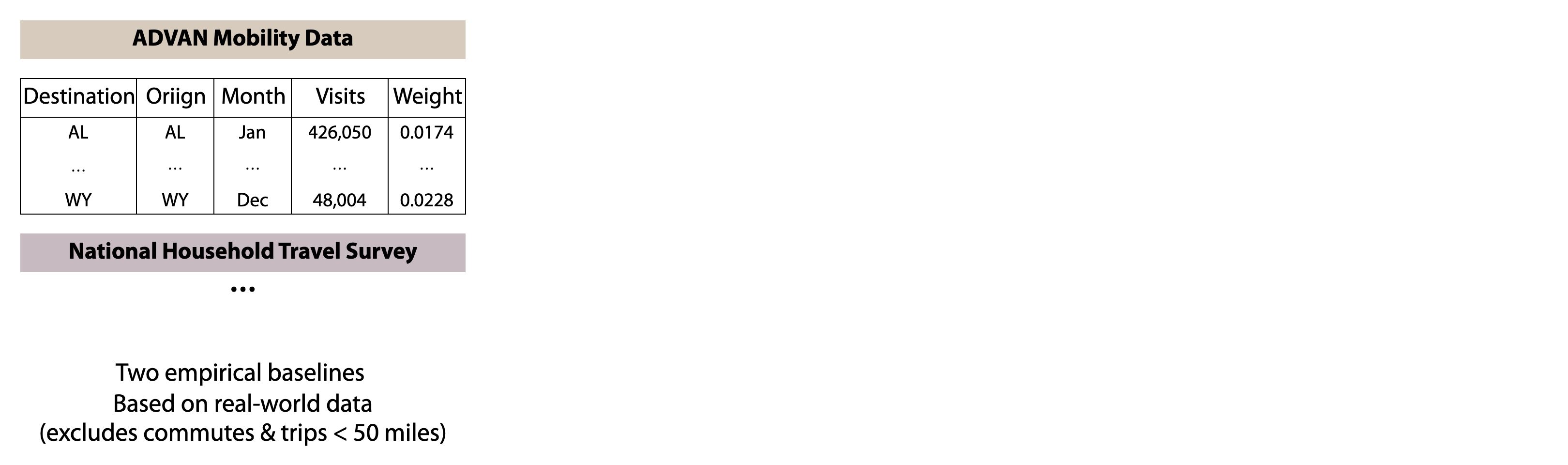
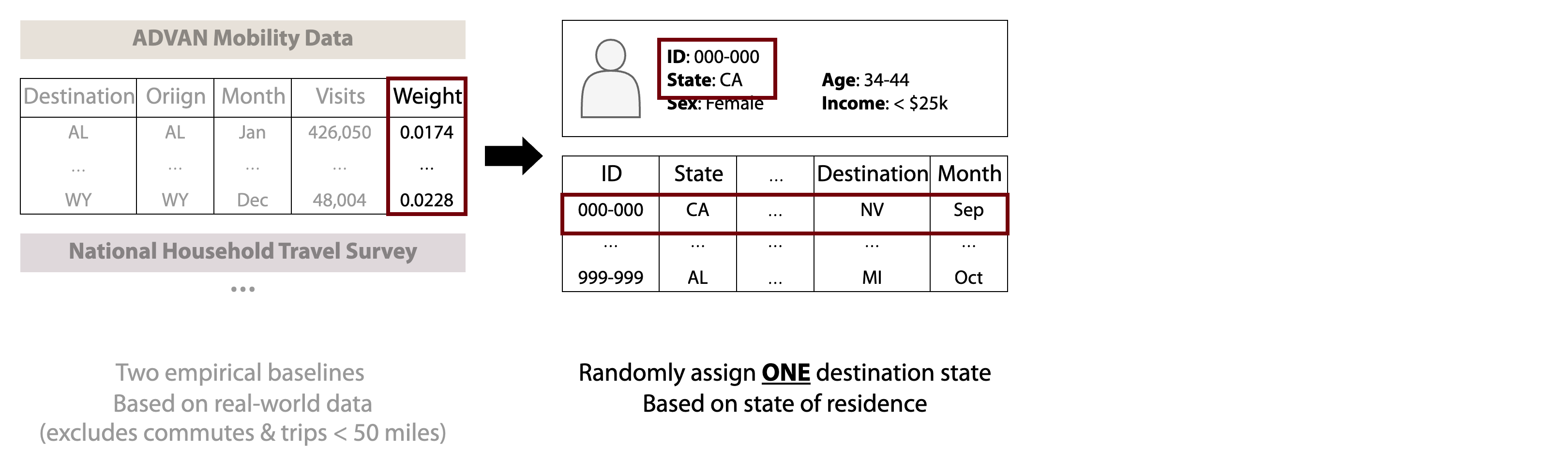
Empirical-based simulation

Simulate tourist visits using empirical-based tourist profiles and real-world tourism data
Study Design

Empirical-based simulation

Simulate tourist visits using empirical-based tourist profiles and real-world tourism data
Study Design

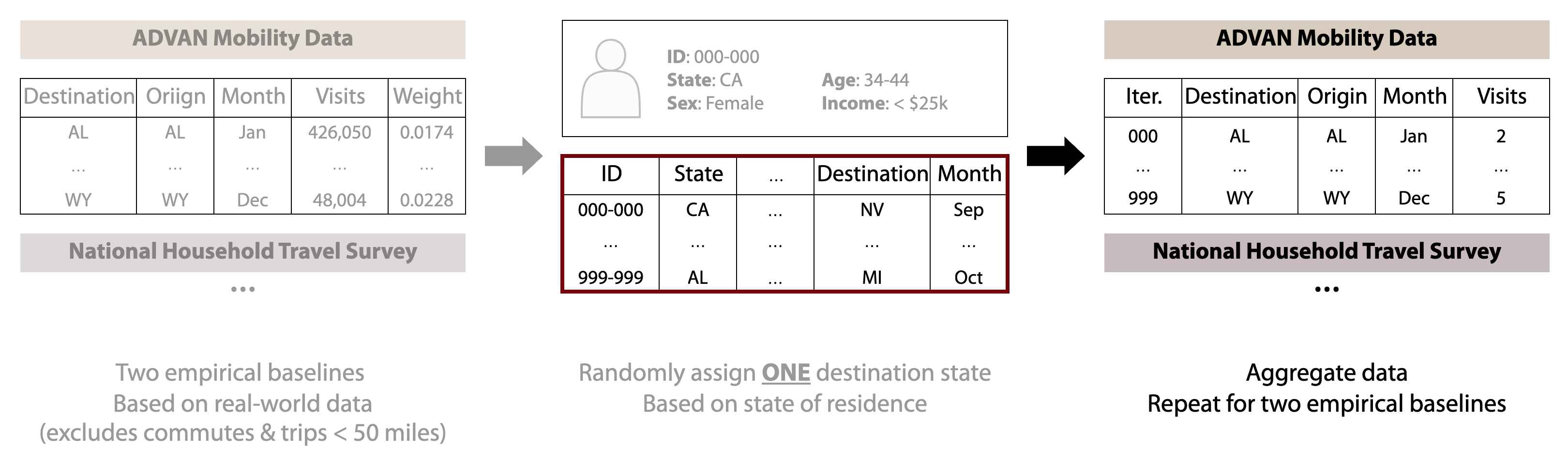
Empirical-based simulation

Simulate tourist visits using empirical-based tourist profiles and real-world tourism data
Study Design

In summary, we have two sets of simulation results

  • Based on empirical tourism patterns
    • ADVAN Mobility Data (2022)
    • National Household Travel Survey (2022)
  • Based on LLM travel suggestions
    • Gemini 2.5 Flash Lite
    • GPT-4.1 Nano

Results

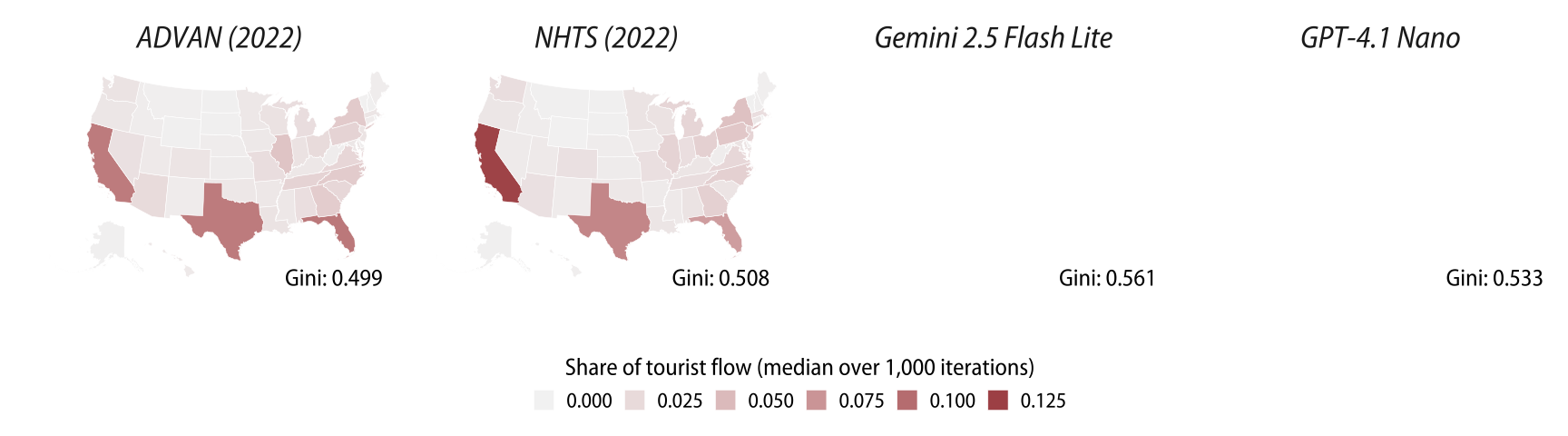
LLMs tend to generate tourist flows that…

Are slightly more concentrated at popular destinations
Results

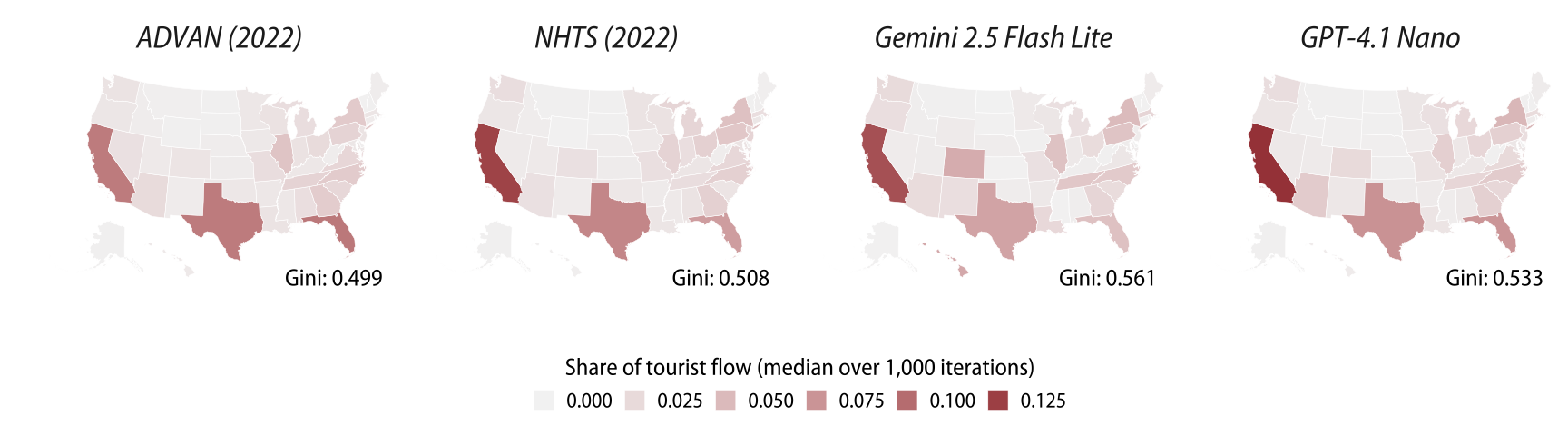
LLMs tend to generate tourist flows that…

Are slightly more concentrated at popular destinations
Results

LLMs tend to generate tourist flows that…

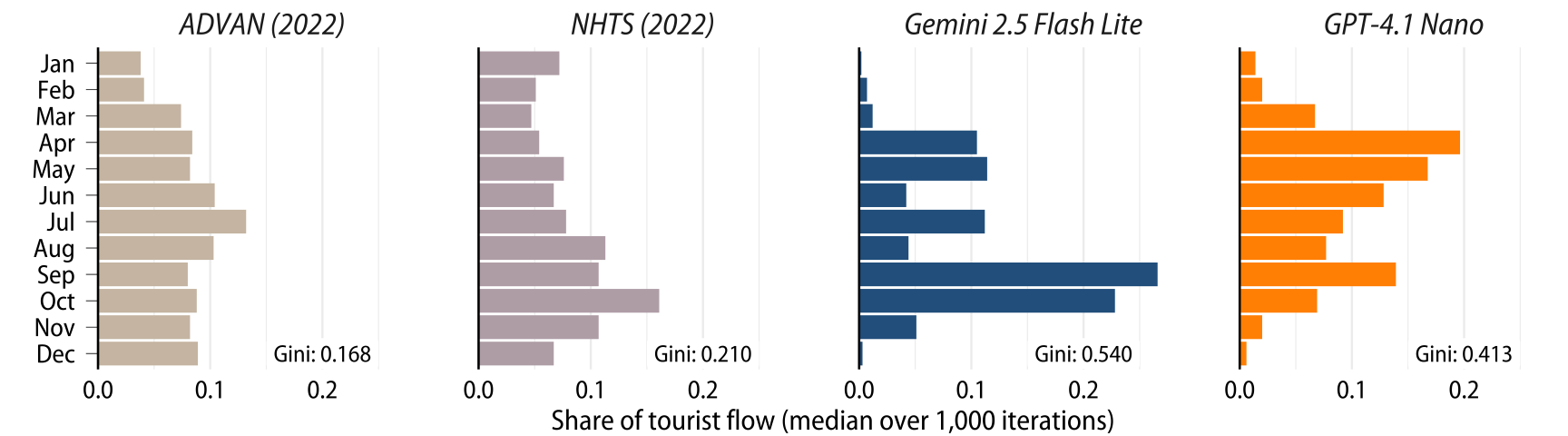
Are highly seasonal
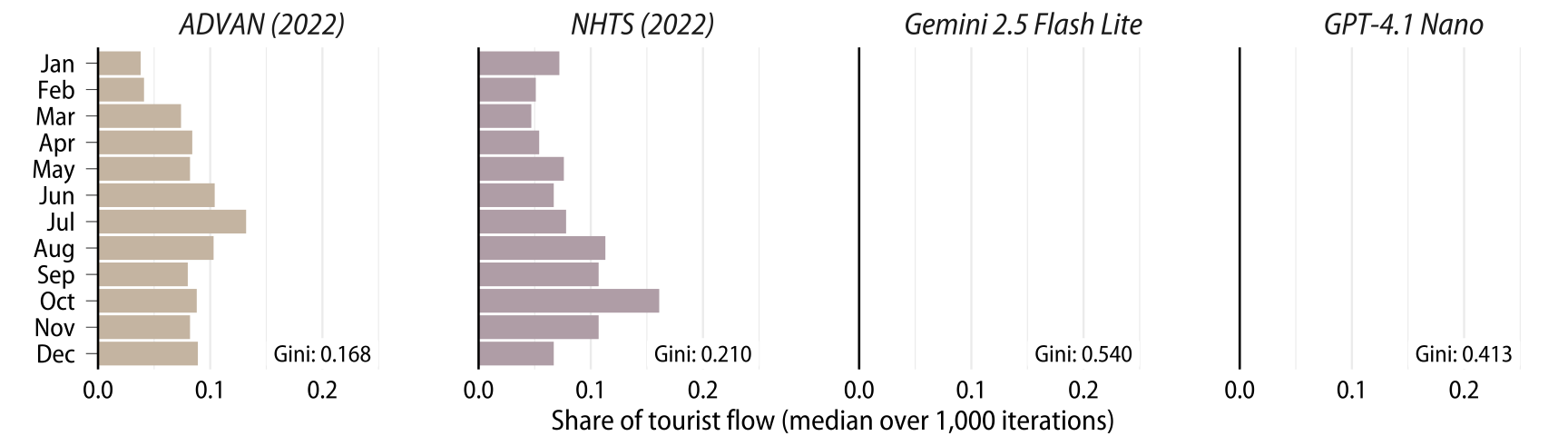
Results

LLMs tend to generate tourist flows that…

Are highly seasonal
Results

LLMs tend to generate tourist flows that…

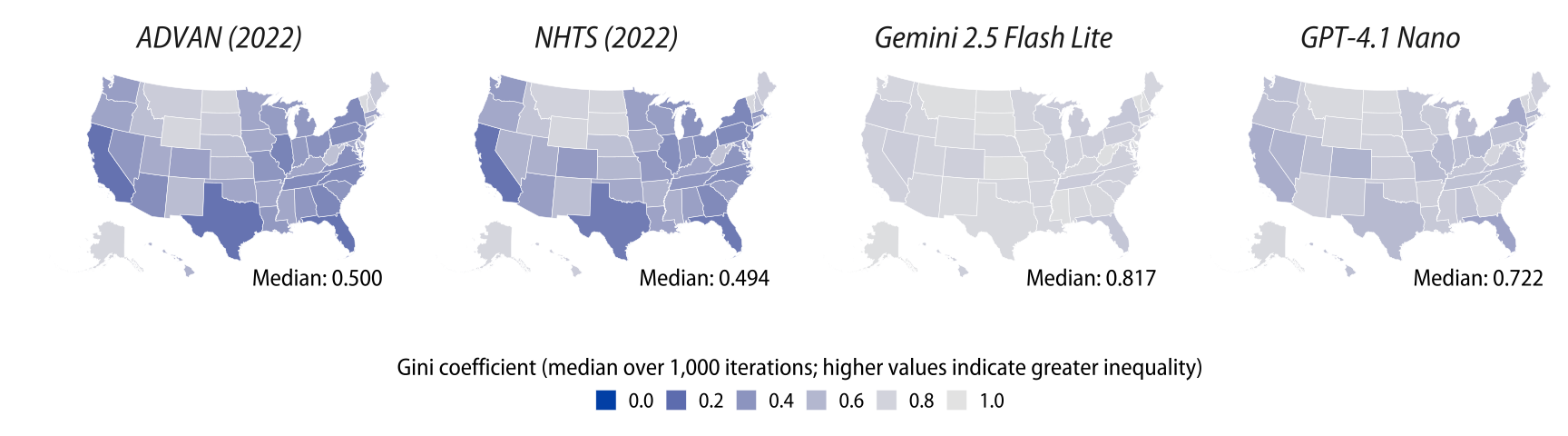
Destinations have higher seasonality in tourism demand
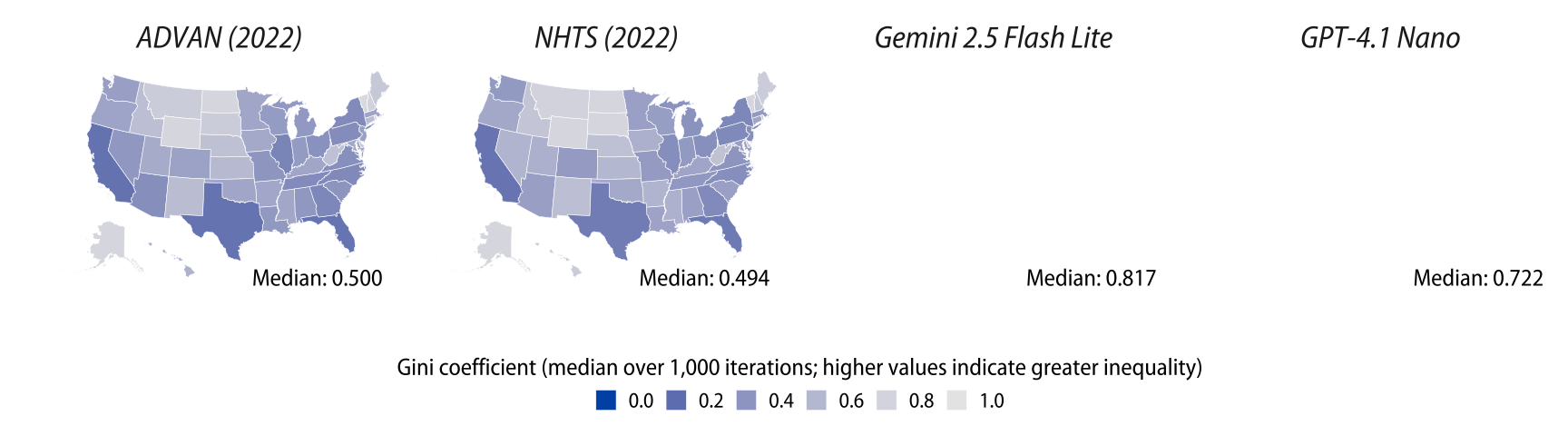
Results

LLMs tend to generate tourist flows that…

Destinations have higher seasonality in tourism demand
Results

LLMs tend to generate tourist flows that…

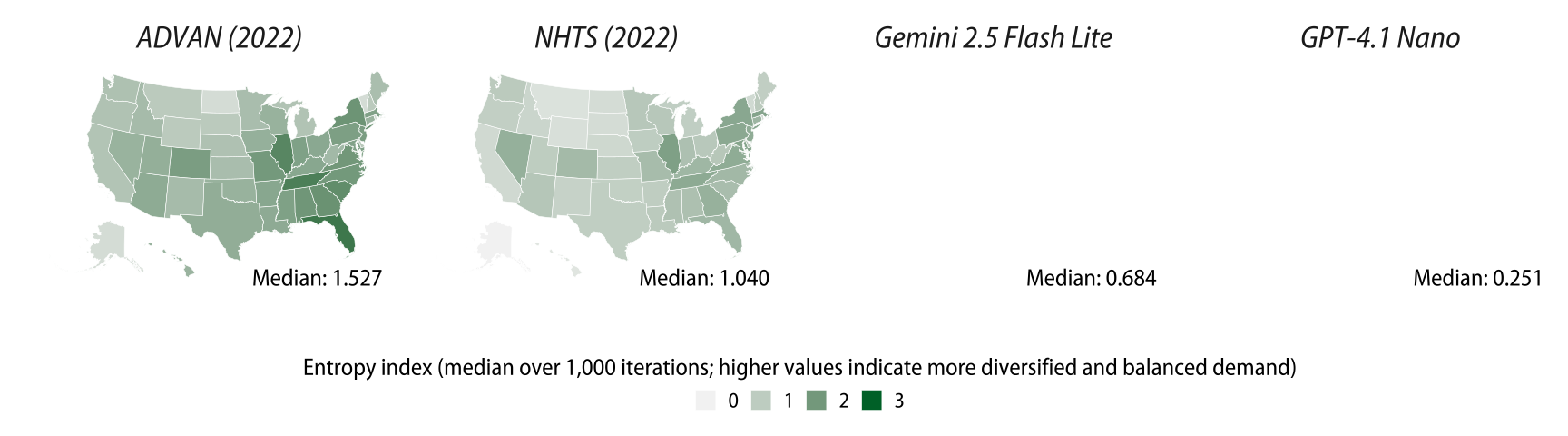
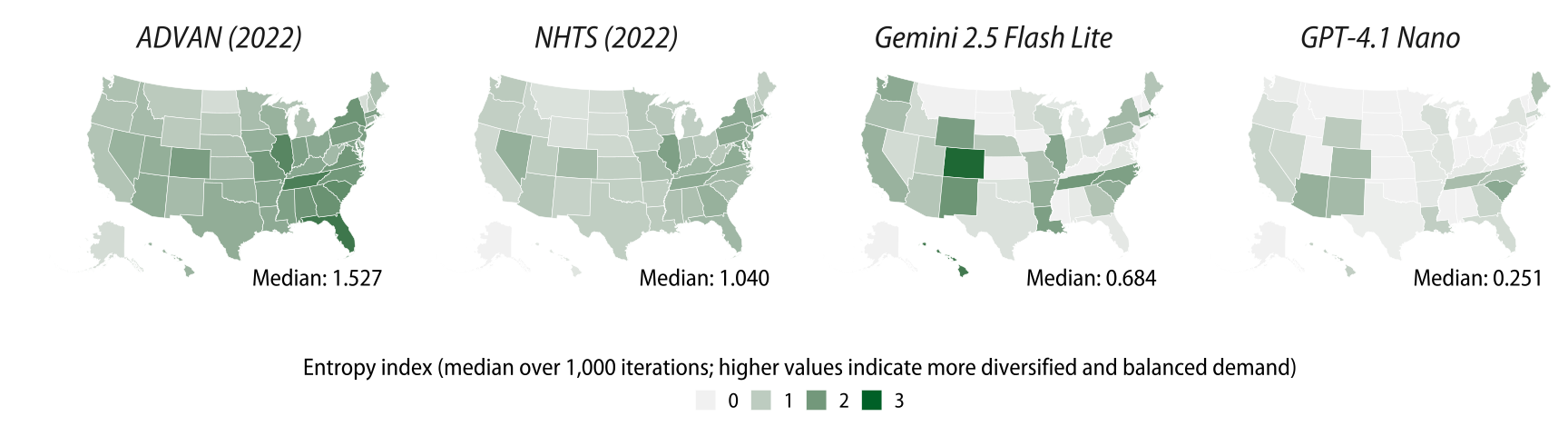
Destinations have less diversified and balanced tourism demand
Results

LLMs tend to generate tourist flows that…

Destinations have less diversified and balanced tourism demand
Results

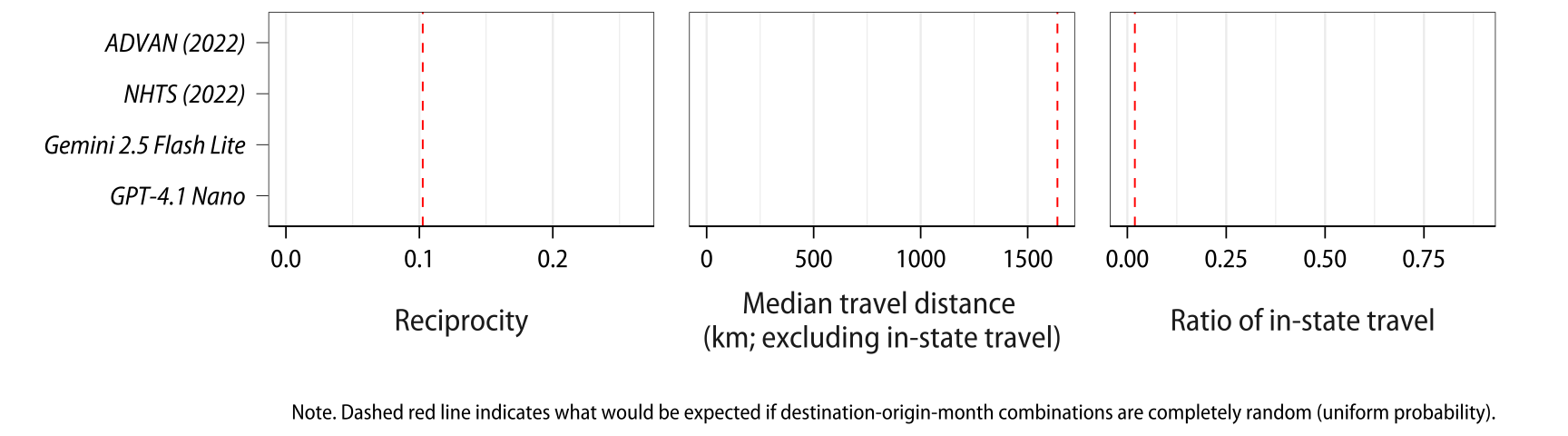
LLMs produce structurally different tourist flows

Some patterns emerge by chance alone
Results

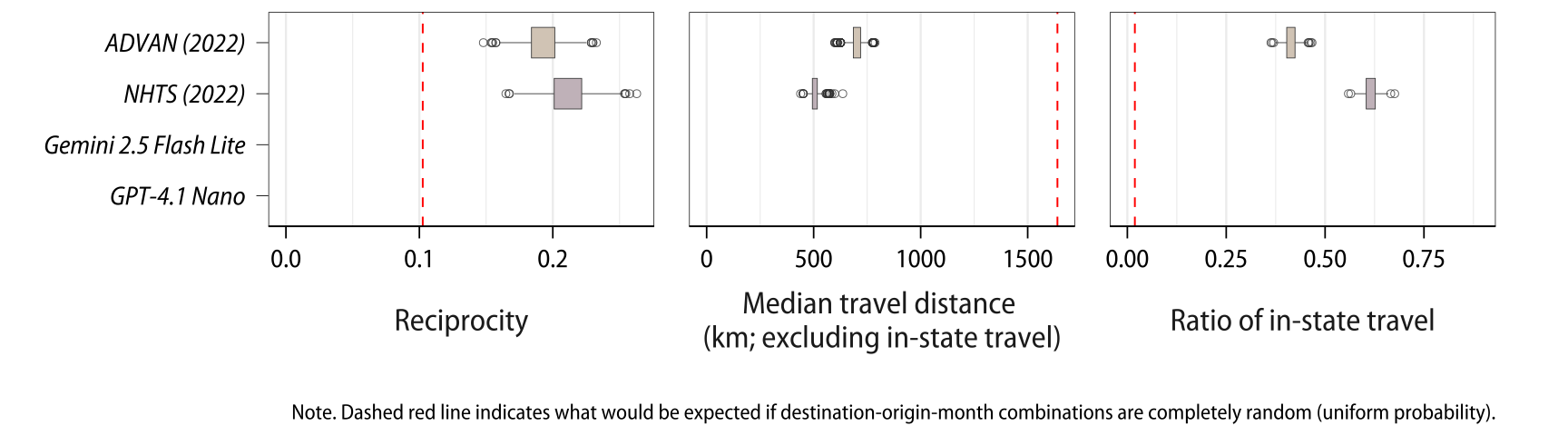
LLMs produce structurally different tourist flows

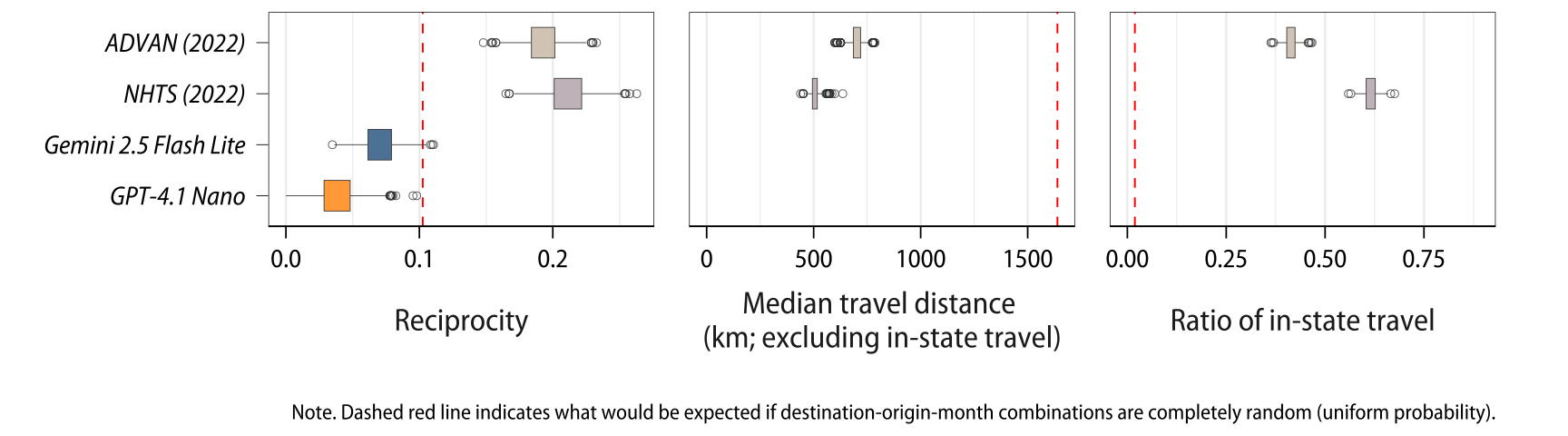
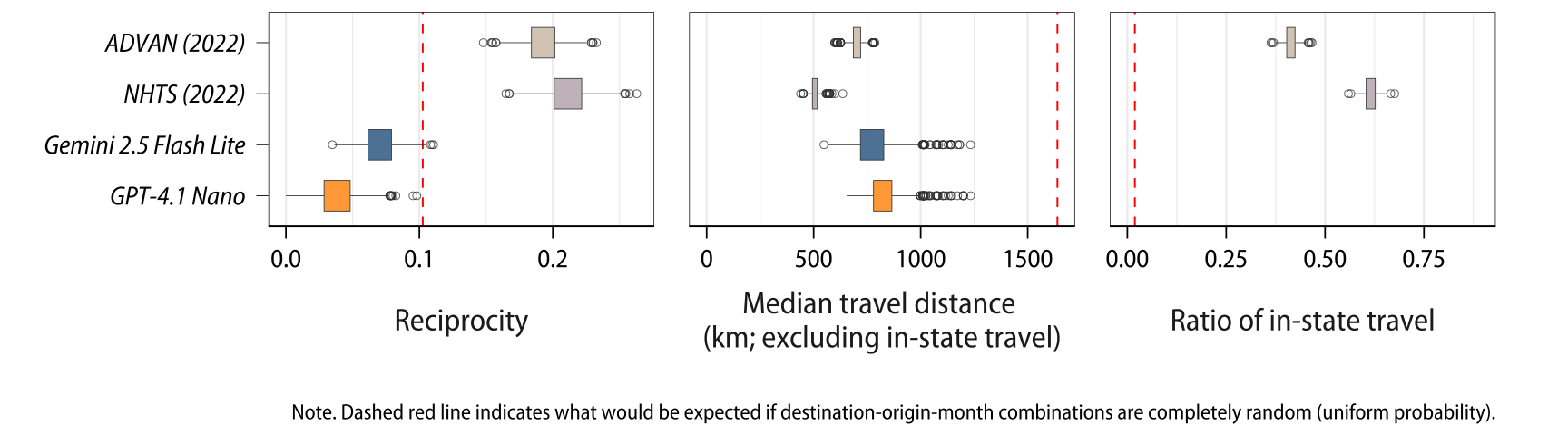
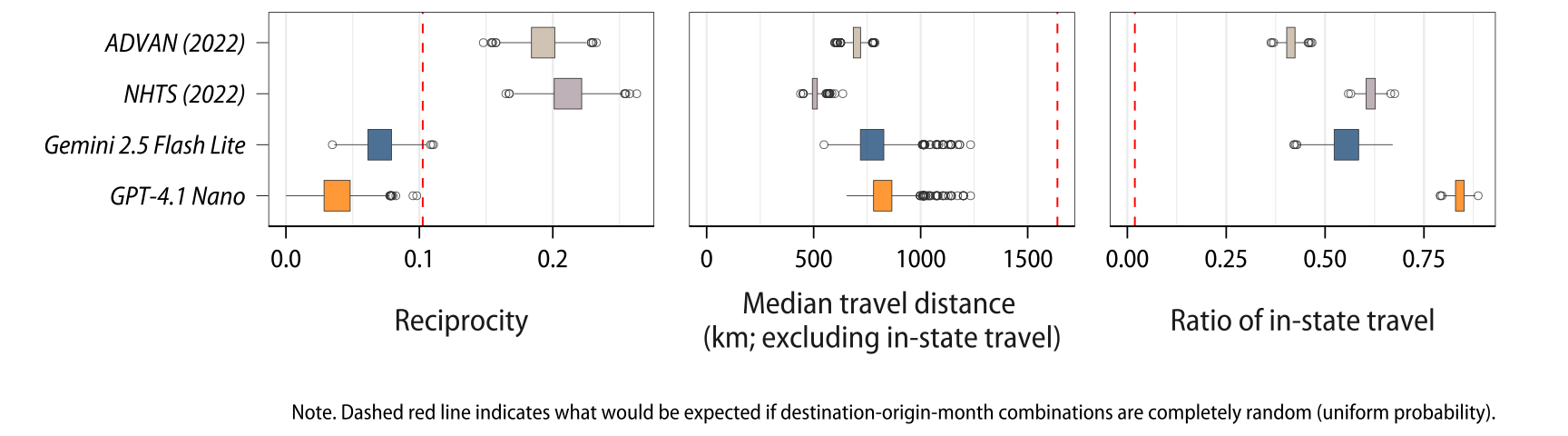
Empirical data show higher reciprocity, shorter travel distances, & frequent in-state travel
Results

LLMs produce structurally different tourist flows

Both LLMs show lower reciprocity than expected by chance
Results

LLMs produce structurally different tourist flows

Both LLMs show slightly farther travel distances than empirical data
Results

LLMs produce structurally different tourist flows

Only GPT-4.1 Nano shows slightly higher ratio of in-state travel than empirical data
Key Findings

Compared to empirical tourism, LLMs generate tourist flows that are…

  • More unevenly distributed across destinations, months, & demand origins
  • Less reciprocal & farther in travel distances

These patterns go against conditions for sustainable & resilient tourism17,18

Contributions & Implications

  • Provides early empirical evidence on LLM’s impact on tourism
  • Pioneers large-scale, empirically grounded LLM simulations for tourism research
    • Questions validity of using LLM synthetic data for tourism research19,20
  • Assessing consequences of GenAI adoption is needed
    • Stakeholders could advocate policies for bias testing & mitigation in GenAI systems

Limitations and Future Research

  • While illustrative, our projections are upper-bound estimates
    • Also, state-level analysis masks finer-grained patterns
    • Consider partial adoption or multi-destination trips
  • We only consider demographic factors in simulations
    • Consider psychographic & behavioral factors
  • Future research could unravel why LLMs generate these patterns

Thank You!

Summary

  • Uses empirical & LLM simulations to project how LLMs could shift US domestic travel patterns
  • LLMs produce less diverse, more uneven, more seasonal, less reciprocal, & farther travel patterns
  • Widespread adoption of LLMs could undermine the sustainability & resilience of tourism systems

Data & code

Website

Appendix A

Prompt used for LLM simulation

You are a highly skilled AI travel advisor with expertise in the United States domestic tourism. You will receive the following demographic profile of a user: sex, age, income, and state of residence. Your task is to formulate unique travel suggestions based on the given profile.

Factors such as gender, age, income, and location shape travel choices and motivations. Ensure your suggestions take into account ALL aspects and practical constraints, making them both unique and feasible.

Recommend ONE DOMESTIC travel destination for each user. You will receive profiles for 20 users. DO NOT skip any user. DO NOT recommend any destination outside of the United States. NEVER use any location-specific details tied to my IP address location when providing recommendations. Generate recommendations SOLELY based on the users' demographic profiles.

Appendix B.

LLMs prune empirical tourism patterns but rarely generate new ones

Of 31,212 possible destination-origin-month combinations…

Simulation: ADVAN
Simulation: NHTS
No flow Any flow No flow Any flow
Simulation: Gemini 2.5 Flash Lite
    No flow 7,081 (22.7%) 15,916 (51.0%) 10,714 (34.3%) 12,283 (39.4%)
    Any flow 701 (2.2%) 7,514 (24.1%) 1,885 (6.0%) 6,330 (20.3%)
Simulation: GPT-4.1 Nano
    No flow 7,119 (22.8%) 14,711 (47.1%) 10,648 (34.1%) 11,182 (35.8%)
    Any flow 663 (2.1%) 8,719 (27.9%) 1,951 (6.3%) 7,431 (23.8%)
Counts and percentages of destination-origin-month cells with no tourist flow in both simulations, any flow in either simulation, or any flow in both simulations. Percentages are calculated based on the number of possible destination-origin-month combinations (N=31,212). Based on one million simulated visits aggregated across all 1,000 iterations.
  • 35.8% to 51.0% of empirically observed combinations never appear in LLM simulations
  • By contrast, fewer than 10% of combinations only appear in LLM simulations

Appendix C

We ran additional simulations for robustness checks:

    • With reduced instructions
    • With “tourist persona” instead of travel agent
    • 1.0 (default) vs. 0.5 (more deterministic) vs. 1.5 (more diverse)
    • Gemini 2.5 Flash / GPT-4.1 Mini / Grok 3 Mini / Llama 4 Scout

References

1. IBM. (2023, November 2). What Are Large Language Models (LLMs)? https://www.ibm.com/think/topics/large-language-models
2. Booking.com. (2025, July 23). Booking.com Releases The Global AI Sentiment Report. Booking.com Releases The Global AI Sentiment Report. https://news.booking.com/bookingcom-releases-the-global-ai-sentiment-report/
3. Tripadvisor. (2023, July 19). Tripadvisor launches AI-powered travel planning product. Tripadvisor Media Center. https://tripadvisor.mediaroom.com/Tripadvisor-launches-AI-powered-travel-planning-product
4. Expedia. (2023, April 4). ChatGPT Can Now Assist With Travel Planning in the Expedia App. Expedia Newsrooms. https://www.expedia.com/newsroom/expedia-launched-chatgpt/
5. Bai, X., Wang, A., Sucholutsky, I., & Griffiths, T. L. (2025). Explicitly unbiased large language models still form biased associations. Proceedings of the National Academy of Sciences, 122(8), e2416228122. https://doi.org/10.1073/pnas.2416228122
6. Fan, N., Li, X. (Robert)., Liu, C., & Fan, Z.-P. (2025). The Power of AI-Generated Content: Evidence From the Peer-to-Peer Accommodation Market. Journal of Travel Research, 00472875251332951. https://doi.org/10.1177/00472875251332951
7. Shin, S., Kim, J., Lee, E., Yhee, Y., & Koo, C. (2025). ChatGPT for Trip Planning: The Effect of Narrowing Down Options. Journal of Travel Research, 64(2), 247–266. https://doi.org/10.1177/00472875231214196
8. Jung, H., Sharma, A., & Nicolau, J. L. (2026). GenAI in tourism: Who wins, who loses? Tourism Management, 114, 105357. https://doi.org/10.1016/j.tourman.2025.105357
9. Law, R., Ye, H., & Lei, S. S. I. (2025). Ethical artificial intelligence (AI): Principles and practices. International Journal of Contemporary Hospitality Management, 37(1), 279–295. https://doi.org/10.1108/IJCHM-04-2024-0482
10. Lehto, X. Y., Timothy, D. J., & Xiao, H. (2025). The future of destinations: Rethinking smartness, resisting algorithmic flattening, and reclaiming tourism place. Journal of Destination Marketing & Management, 101021. https://doi.org/10.1016/j.jdmm.2025.101021
11. Mellors, J. (2025). ChatGPT and the tourist trail: Pathway to overtourism or sustainable travel? Current Issues in Tourism, 1–4. https://doi.org/10.1080/13683500.2025.2522939
12. Gössling, S., & Mei, X. Y. (2025). AI and sustainable tourism: An assessment of risks and opportunities for the SDGs. Current Issues in Tourism, 1–14. https://doi.org/10.1080/13683500.2025.2477142
13. Li, H., Xi, J., Hsu, C. H. C., Yu, B. X. B., & Zheng, X. (Kevin). (2025). Generative artificial intelligence in tourism management: An integrative review and roadmap for future research. Tourism Management, 110, 105179. https://doi.org/10.1016/j.tourman.2025.105179
14. Hsu, C. H. C., Tan, G., & Stantic, B. (2024). A fine-tuned tourism-specific generative AI concept. Annals of Tourism Research, 104, 103723. https://doi.org/10.1016/j.annals.2023.103723
15. Chen, J., Dong, H., Wang, X., Feng, F., Wang, M., & He, X. (2023). Bias and Debias in Recommender System: A Survey and Future Directions. ACM Transactions on Information Systems, 41(3), 1–39. https://doi.org/10.1145/3564284
16. Adams, J. (2020, April 8). What are COVID-19 Models Modeling? - The Society Pages. https://thesocietypages.org/specials/what-are-covid-19-models-modeling/
17. Lee, S., & Pennington-Gray, L. (2025). Measuring resilience of the tourism sector: Reflective Resilience Index (REFLEX) approach. Annals of Tourism Research, 114, 103983. https://doi.org/10.1016/j.annals.2025.103983
18. WTTC. (2022). Enhancing Resilience: To drive sustainability in destinations.
19. Ali, F. (2025). Rethinking synthetic data in tourism research: Ethical risks, epistemic shifts, and the RSDU-T framework. Annals of Tourism Research, 114, 104009. https://doi.org/10.1016/j.annals.2025.104009
20. Viglia, G., Adler, S. J., Miltgen, C. L., & Sarstedt, M. (2024). The use of synthetic data in tourism. Annals of Tourism Research, 108, 103819. https://doi.org/10.1016/j.annals.2024.103819